

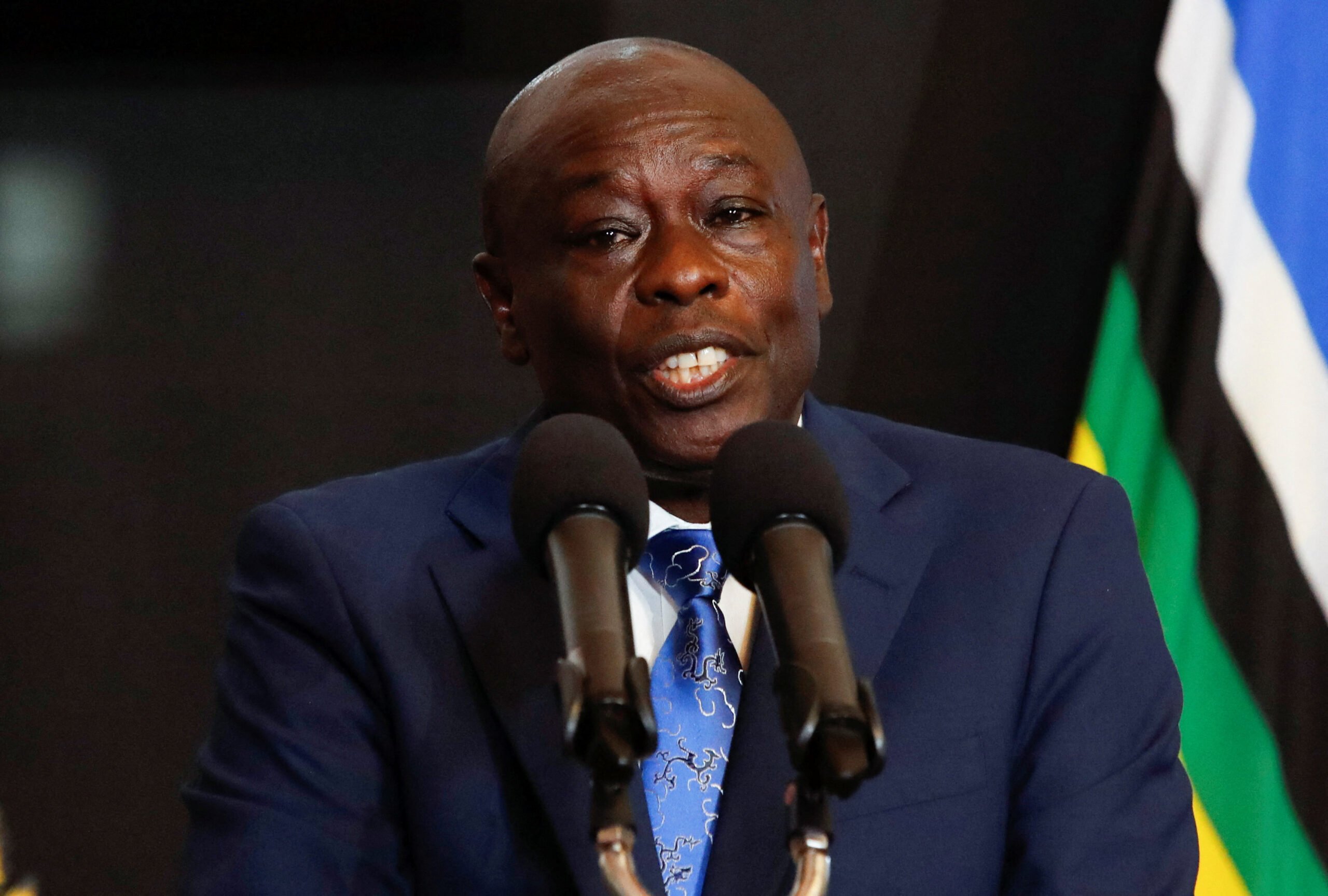
Kenya’s political landscape is facing a moment of heightened tension as the Senate prepares to vote on a motion to remove Deputy President Rigathi Gachagua from office. The vote comes after weeks of escalating political drama and debate over allegations of corruption, abuse of office, and conduct unbecoming of a high-ranking official. If successful, the motion could lead to a seismic shift in Kenya’s leadership, with broad implications for the country’s political stability and governance.
Background: The Allegations Against the Deputy President
The push to remove Deputy President Gachagua stems from accusations of corruption and the misappropriation of public funds during his time as a public official prior to assuming the role of deputy president. While he has repeatedly denied the charges, critics argue that Gachagua’s involvement in numerous scandals has cast a shadow over the integrity of the government, and his continued presence in office undermines Kenya’s efforts to combat corruption.
Investigations by Kenya’s Ethics and Anti-Corruption Commission (EACC) have been ongoing for several months, with Gachagua being implicated in questionable dealings related to state contracts and personal financial gains. The accusations have fueled political opposition, both within the ruling party and from opposition parties, leading to the current motion for his removal.
Key opposition figures, led by the Azimio la Umoja coalition, have spearheaded the push for his ouster, arguing that his continued role as deputy president compromises Kenya’s commitment to transparency and good governance. The motion also includes claims of abuse of office, with accusations that Gachagua used his position to intimidate and pressure government officials into awarding contracts to entities associated with him.
Political Implications of the Senate Vote
The impending Senate vote is seen as a critical test for President William Ruto’s administration, as Gachagua has been one of his closest political allies. If the vote to remove him passes, it could signal a deepening political crisis within the ruling party, United Democratic Alliance (UDA). It may also indicate growing internal divisions, which could weaken Ruto’s authority and jeopardize his administration’s agenda as it grapples with economic challenges and calls for reforms.
For the opposition, a successful vote to remove Gachagua would be seen as a victory, bolstering their position as watchdogs against corruption and strengthening their political influence. However, the outcome is far from certain, as Ruto’s supporters are expected to mount a fierce defense of the deputy president, arguing that the motion is politically motivated and lacks sufficient evidence.
The political maneuvering in the Senate will be closely watched, with both sides lobbying intensely to sway undecided senators. The outcome could either reinforce the administration’s unity or expose further fractures within the ruling coalition.
Constitutional and Legal Considerations
Under Kenya’s constitution, the removal of a deputy president is a complex process that requires a multi-step procedure involving both houses of Parliament. The motion must first pass in the Senate, where it requires a two-thirds majority to succeed. If the Senate votes in favor of the motion, the matter then moves to the National Assembly, where a similar two-thirds majority is required for the deputy president’s removal to be finalized.
The Senate will base its decision not only on the specific allegations against Gachagua but also on broader considerations of governance, ethics, and the precedent it sets for the future. Critics argue that if the Senate fails to act, it could undermine efforts to hold public officials accountable, reinforcing the culture of impunity that has plagued Kenya’s political system for decades.
On the other hand, supporters of Gachagua claim that the accusations are politically driven and that removing him would destabilize the government, leading to uncertainty at a time when Kenya is facing significant economic and social challenges.
Public Sentiment and Political Reactions
Public opinion in Kenya is divided over the issue, with many citizens expressing frustration at the slow pace of the fight against corruption in the country. Gachagua’s case has sparked widespread debate on social media and in the press, with some Kenyans calling for his immediate removal, while others argue that the focus should be on broader institutional reforms rather than individual scapegoating.
Political analysts have noted that the outcome of the Senate vote could influence Kenya’s political trajectory heading into future elections. Should the motion to remove Gachagua fail, it may be seen as a victory for the ruling party, but it could also embolden opposition forces to continue challenging the administration on issues of corruption and governance.
President Ruto has yet to make a definitive public statement on the matter, but his administration is likely working behind the scenes to secure enough support in the Senate to block the motion. Ruto’s leadership could face serious scrutiny if Gachagua is removed, with questions about the long-term viability of his administration and the potential for further political instability.
Potential Outcomes and Next Steps
As the Senate prepares for the vote, the political future of Deputy President Gachagua hangs in the balance. A vote to remove him would set a significant precedent in Kenya’s political history, marking one of the highest-ranking officials to be ousted through parliamentary action. It could lead to new leadership within the office of the deputy president, and possibly even a reshuffling of the cabinet.
Conversely, if the motion fails, it would represent a significant victory for Gachagua and the Ruto administration, but it may not put an end to the controversies surrounding the deputy president. Legal battles over the corruption allegations are likely to continue, and opposition parties may seek other avenues to challenge the government’s credibility on anti-corruption reforms.
In either scenario, Kenya’s Senate vote will be a defining moment, not just for Deputy President Gachagua, but for the country’s ongoing struggle with corruption and the integrity of its political system.
Conclusion
Kenya’s Senate vote on the removal of Deputy President Rigathi Gachagua is poised to be a landmark political event. With allegations of corruption and abuse of office casting a shadow over his role, the Senate’s decision will have far-reaching implications for Kenya’s political stability and governance. As the country watches closely, the outcome of this vote could redefine Kenya’s political landscape and test the resilience of its democratic institutions.