

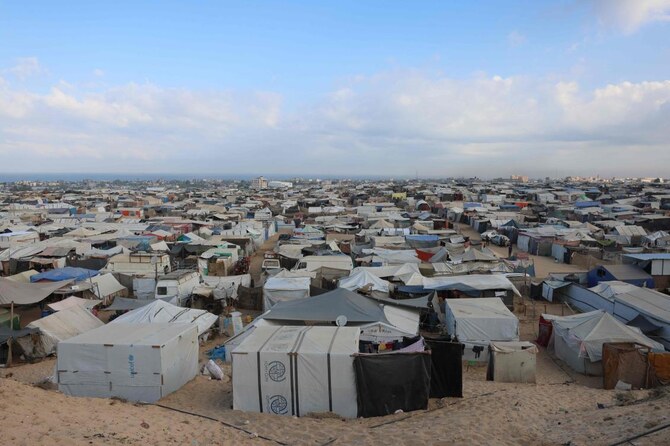
The Gaza Strip is facing a deepening economic and humanitarian crisis, with unemployment soaring to an unprecedented 80% amid the region’s economic collapse. The sharp rise in joblessness comes as Gaza grapples with a devastating combination of long-standing political instability, military conflict, and an Israeli blockade that has crippled its economy. With limited opportunities, a collapsing infrastructure, and dwindling resources, the people of Gaza are left struggling to survive.
A Worsening Humanitarian Crisis
Gaza’s economic collapse has exacerbated an already dire humanitarian situation. The ongoing Israeli blockade, which was imposed after Hamas took control of Gaza in 2007, has severely restricted the movement of goods and people in and out of the territory. Combined with the destruction caused by repeated conflicts, this has left Gaza’s economy in tatters.
The effects of the economic meltdown are being felt across all sectors. Many businesses have been forced to close, with factories operating at minimal capacity or shutting down entirely due to shortages of raw materials and fuel. The construction industry, which once provided thousands of jobs, has ground to a halt as essential supplies such as cement and steel remain restricted.
Essential services, including healthcare and education, are also on the brink of collapse. Gaza’s hospitals are overwhelmed, with chronic shortages of medicine, equipment, and medical personnel. Schools are struggling to stay open, and many children are missing out on their education, further dimming prospects for future generations.
Mahmoud Ayyash, an economist based in Gaza, described the situation as “catastrophic,” noting that the ongoing conflict and economic isolation have made it impossible for any meaningful recovery. “People are losing hope,” Ayyash said. “The economy is not just stagnant; it is imploding.”
The Youth and Graduates: Victims of a Failing Economy
The hardest hit by the unemployment surge are Gaza’s youth, who make up a significant portion of the population. The region has one of the youngest demographics in the world, with around 45% of its 2.3 million residents under the age of 15. For young people graduating from universities and colleges, finding a job is almost impossible, leading to widespread frustration and disillusionment.
According to a recent report by the Palestinian Central Bureau of Statistics, more than 70% of college graduates in Gaza are unemployed, a staggering figure that reflects the absence of job opportunities and the disconnect between education and the labor market. Many young people have been forced to take up informal, low-paying jobs or rely on aid from international organizations to meet their basic needs.
“My degree feels worthless,” said 24-year-old Hanan, who graduated with a degree in engineering two years ago but has been unable to find work. “There are no jobs. No matter how hard you try, it feels like the world is against you.”
Impact of the Blockade and Repeated Conflicts
The Israeli blockade, which restricts the flow of goods, services, and people into Gaza, has been a major factor in the region’s economic collapse. While Israel argues that the blockade is necessary for its security, particularly to prevent weapons smuggling into Gaza, human rights organizations have long criticized the restrictions as a form of collective punishment on Gaza’s civilian population.
The blockade has also had severe economic consequences. Gaza’s once-thriving agricultural and fishing sectors have been decimated by the restrictions, leaving many families that once relied on farming and fishing without a livelihood. The lack of access to international markets and basic resources has stifled any attempts at economic growth.
Additionally, the region has been devastated by repeated rounds of conflict between Israel and Hamas, the latest of which occurred in 2023. These conflicts have destroyed critical infrastructure, including homes, schools, and healthcare facilities, and have further hampered economic recovery efforts. Rebuilding efforts have been slow, in part due to the lack of construction materials allowed into the region.
International Aid and Economic Dependence
As Gaza’s economy continues to collapse, the region has become increasingly dependent on international aid to sustain its population. Humanitarian organizations, including the United Nations Relief and Works Agency (UNRWA), provide food assistance, healthcare, and education to millions of people in Gaza. However, funding for these organizations is often precarious, with political disputes and donor fatigue threatening to reduce the aid flowing into the region.
Despite these efforts, aid alone is insufficient to address the root causes of Gaza’s economic decline. Without a political solution that addresses the blockade and allows for greater economic freedom, Gaza’s dependency on aid will only grow, deepening the cycle of poverty.
“The international community’s aid is a lifeline, but it is not a solution,” said a UN official working in Gaza. “Gaza needs a functioning economy and access to the outside world. Without that, no amount of aid will be enough to bring real change.”
Political Deadlock and the Path Forward
The economic crisis in Gaza is inextricably linked to the broader Israeli-Palestinian conflict, which has been locked in a political stalemate for decades. Diplomatic efforts to resolve the conflict and end the blockade have repeatedly failed, with both sides unable to reach an agreement on key issues such as security, borders, and the status of Jerusalem.
Hamas, which governs Gaza, remains politically isolated by much of the international community due to its refusal to renounce violence and its ongoing conflict with Israel. Efforts to form a unity government between Hamas and the Palestinian Authority, which governs the West Bank, have also repeatedly broken down, further complicating any potential path to peace and economic recovery.
The international community has called for renewed efforts to address the humanitarian crisis in Gaza. However, with no political solution in sight and tensions between Israel and Hamas continuing to flare, the situation remains bleak.
Conclusion: A Region in Peril
Gaza’s soaring unemployment rate of 80% reflects the deep economic and humanitarian challenges facing the region. With a collapsing economy, widespread poverty, and little hope for recovery under the current political conditions, the people of Gaza are left in a state of perpetual crisis.
As the world watches, the need for a long-term solution becomes ever more urgent. While international aid provides a temporary reprieve, without addressing the root causes of Gaza’s economic isolation and political instability, the prospects for the region remain grim.
For the people of Gaza, the struggle for survival continues, but with each passing day, the path to recovery seems further out of reach.