

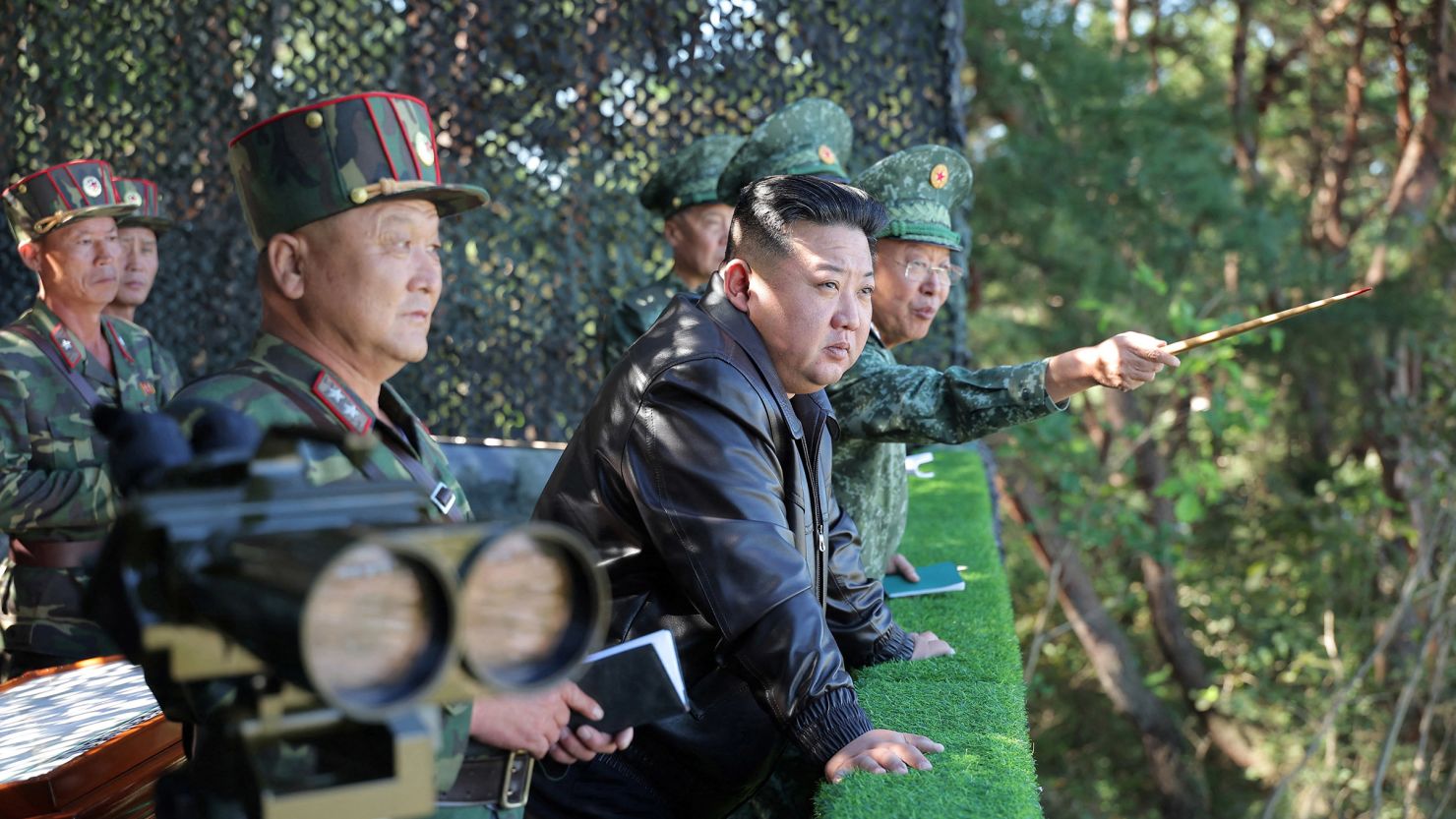
In a recent escalation of rhetoric, North Korean leader Kim Jong Un has issued a stark warning, threatening to annihilate South Korea with nuclear weapons if provoked. The comments come amid heightened tensions on the Korean Peninsula, where military activities and rhetoric have intensified over recent months.
During a speech marking the anniversary of North Korea’s armed forces, Kim declared that any perceived aggression from South Korea would be met with “overwhelming nuclear force.” He emphasized that North Korea would not hesitate to employ its nuclear arsenal to protect its sovereignty and retaliate against any threats. Kim’s remarks signal a stark departure from previous diplomatic overtures and reflect the regime’s increasingly aggressive posture in the face of ongoing military exercises conducted by South Korea and the United States.
The North Korean leader criticized the joint military drills conducted by the U.S. and South Korea, labeling them as rehearsals for invasion. He asserted that such maneuvers provoke a volatile security environment, justifying North Korea’s ongoing efforts to enhance its military capabilities, including the development and testing of nuclear weapons.
In response to Kim’s threats, South Korean officials have reaffirmed their commitment to national defense and their alliance with the United States. The South Korean government emphasized its readiness to respond decisively to any aggression from the North. Military analysts in South Korea are closely monitoring the situation, particularly as Kim’s rhetoric raises concerns over the potential for miscalculation and conflict on the peninsula.
The threats come against a backdrop of escalating tensions, with North Korea conducting a series of missile tests in recent months. These tests are seen as both a demonstration of military capability and a means to strengthen internal support for Kim’s regime. The international community has condemned these actions, calling for denuclearization talks to resume and urging North Korea to engage in dialogue rather than provocation.
The United States has also responded to Kim’s statements, reaffirming its commitment to defending South Korea and its regional allies. U.S. officials reiterated their position that North Korea’s nuclear threats are unacceptable and counterproductive to regional stability. The Biden administration has expressed a willingness to engage in diplomacy but maintains that North Korea must first take steps toward denuclearization.
Kim’s latest remarks highlight the precarious nature of security on the Korean Peninsula, where the potential for conflict remains high. Analysts warn that the combination of provocative military actions, aggressive rhetoric, and a lack of communication channels could lead to unintended escalations. As both North and South Korea continue to bolster their military capabilities, the risk of confrontation grows, raising concerns for the broader region.
The situation remains fluid, with diplomatic efforts crucial in defusing tensions and preventing the outbreak of hostilities. The international community, particularly key players such as China and Russia, may play a pivotal role in mediating dialogue and encouraging North Korea to reconsider its aggressive stance. In the meantime, Kim Jong Un’s threats serve as a reminder of the challenges faced in achieving lasting peace and stability on the Korean Peninsula.