

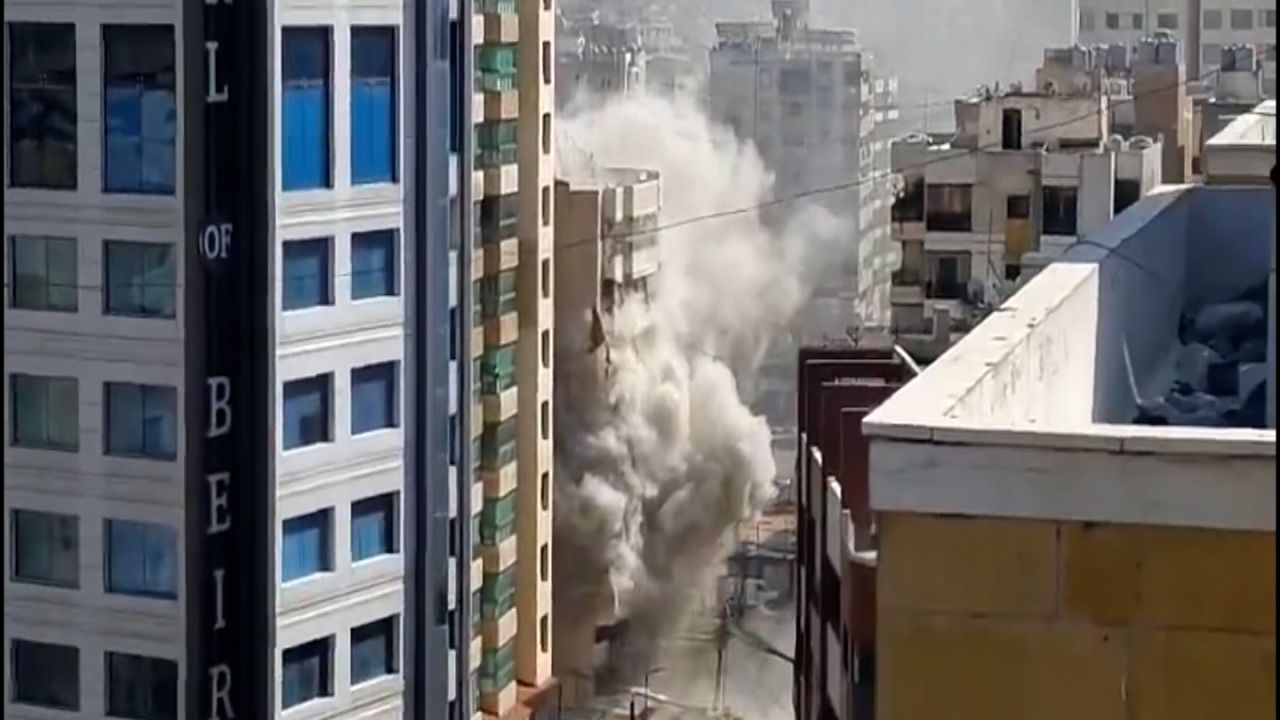
Recent airstrikes in Beirut were aimed at a potential new leader of Hezbollah, according to statements from an Israeli official. The strikes, which occurred in the early hours of the morning, targeted key locations believed to be connected to Hezbollah’s leadership, intensifying tensions in the already volatile region. The Israeli official, who spoke on condition of anonymity, stated that the operation was part of a broader effort to curb Hezbollah’s influence and prevent an imminent power shift within the militant group.
Hezbollah, an Iran-backed Shiite militia and political party, has long been a thorn in Israel’s side, with their conflict spanning decades. The group’s current leader, Hassan Nasrallah, has been in power since the early 1990s, leading Hezbollah through various conflicts with Israel, including the 2006 Lebanon War. Recently, there have been reports that Hezbollah might be undergoing leadership changes, potentially paving the way for a successor to Nasrallah. The Israeli official indicated that the strikes targeted an individual seen as a key contender for Hezbollah’s leadership, believed to be in close contact with Iranian military advisors.
The airstrikes, which hit southern parts of Beirut, caused significant damage to the area, but no immediate reports of casualties have been confirmed. Hezbollah has not officially commented on the incident, although the Lebanese government condemned the strikes as a violation of its sovereignty, warning of the potential for escalation. Lebanese officials have called for international intervention to prevent further strikes and stabilize the situation, which risks further destabilizing an already fragile Lebanon.
Israel has a long-standing policy of not commenting on specific military operations, but it has frequently targeted Hezbollah positions in Lebanon and Syria to disrupt weapons transfers and strategic movements. Hezbollah, considered a terrorist organization by Israel, the United States, and several other countries, has amassed significant power in Lebanon both politically and militarily. The group’s growing influence has led to fears of an expanded conflict with Israel, particularly as Hezbollah continues to acquire sophisticated weaponry and build up military infrastructure near the Israeli-Lebanese border.
The strikes come at a critical time, as Lebanon continues to grapple with economic collapse, political dysfunction, and a humanitarian crisis. Hezbollah’s role in Lebanese politics has further complicated international efforts to provide aid to the country, as many Western nations are unwilling to support a government heavily influenced by a group that is backed by Iran.
Analysts suggest that the targeting of a potential new Hezbollah leader reflects Israel’s ongoing efforts to disrupt the group’s activities and leadership structure. Such moves could be aimed at undermining Hezbollah’s ability to operate effectively, especially at a time when the group may be experiencing internal shifts in leadership. However, these strikes also risk provoking retaliation from Hezbollah, which has previously vowed to respond to Israeli aggression.
The airstrikes and their reported target underscore the fragile nature of the current situation in Lebanon and the broader Middle East. As Hezbollah navigates potential leadership changes, and Israel continues its efforts to neutralize perceived threats, the likelihood of further escalation remains high. The situation serves as a reminder of the delicate balance in the region and the ever-present risk of renewed conflict between Israel and Hezbollah, which could have wide-ranging consequences for the entire Middle East.