

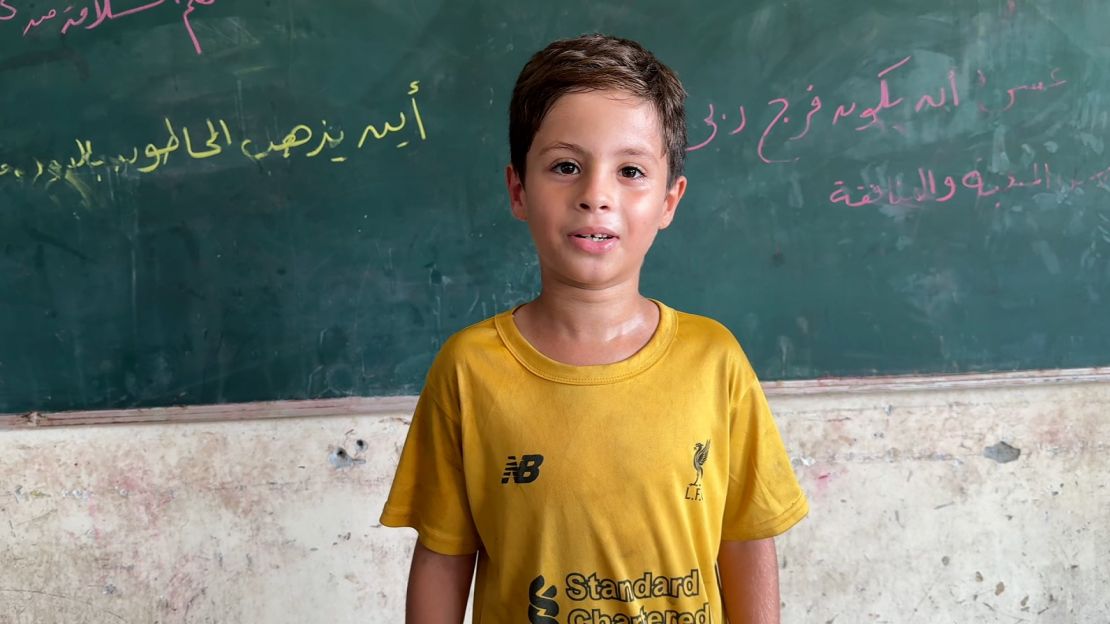
The ongoing conflict between Israel and Gaza has left many of Gaza’s children facing not just the physical devastation of war, but the loss of a critical aspect of their futures—education. Schools, once places of safety and learning, have been disrupted by the war, forcing thousands of children to abandon their studies. As violence continues to rage, families and educators in Gaza grapple with the devastating impact this conflict has on the youngest generation, who are now growing up without access to regular schooling.
The War’s Toll on Education
For many children in Gaza, school is no longer part of their daily lives. With schools either destroyed, closed due to safety concerns, or repurposed as shelters for displaced families, the disruption to education has been profound. According to the United Nations, over 300,000 children in Gaza are unable to attend school due to the conflict, and the number continues to grow as violence escalates.
Teachers and students alike have described how their lives have been upended by the war. “We no longer study,” says Leila, a 12-year-old from Gaza City. “Our school was hit, and now we don’t know when we will return. I just want to learn and be with my friends again.” Leila’s experience is shared by thousands of children across Gaza, where classrooms have been reduced to rubble, and the hope of returning to normalcy seems distant.
The current conflict has taken an especially heavy toll on education in Gaza, where years of war and blockade have already strained the education system. Before the conflict intensified, Gaza’s schools were already struggling with overcrowding, limited resources, and inadequate infrastructure. The war has compounded these challenges, creating a crisis that threatens to deprive an entire generation of their right to education.
Schools as Shelters: A Dual Role in Crisis
One of the most immediate impacts of the war has been the repurposing of schools as shelters for those fleeing violence. Many schools in Gaza have been converted into temporary shelters for displaced families, especially in densely populated urban areas where homes have been destroyed by airstrikes. According to the United Nations Relief and Works Agency (UNRWA), more than 90 schools across Gaza are now housing displaced people, making it impossible for regular classes to resume.
For families living in these schools, the situation is dire. The conditions are overcrowded, with limited access to basic necessities such as food, water, and medical care. In such an environment, education becomes a distant concern. “How can my children study when we are living in a classroom with 20 other families?” asks Mahmoud, a father of four who sought refuge in a Gaza City school after his home was destroyed. “We are just trying to survive. Education feels like a luxury we can’t afford right now.”
The dual role of schools as both places of learning and shelters reflects the difficult choices that Gazans are forced to make during times of conflict. While many families prioritize safety and shelter over education, the long-term consequences of this disruption are significant. The loss of education not only affects children’s academic development but also their mental health, sense of stability, and future prospects.
Psychological Impact on Gaza’s Children
The disruption to education is just one of many ways in which the war is affecting the psychological well-being of Gaza’s children. The violence and uncertainty have left many children traumatized, compounding the emotional toll of being unable to attend school. In a region where children have already grown up with the constant threat of conflict, the current war is deepening the trauma.
Teachers and counselors working in Gaza have reported that children are experiencing high levels of anxiety, fear, and hopelessness. “Many of the children I work with talk about their fear of dying or losing their family members,” says Amina, a school counselor in Gaza. “School was a place where they could escape the chaos around them, even if just for a few hours. Now that sense of safety is gone.”
The loss of routine and the lack of educational engagement have exacerbated the emotional toll. In normal times, school provided structure and a sense of normalcy for children living in a conflict zone. Without that, many children feel adrift, with nothing to distract them from the horrors of war. Psychologists warn that the long-term effects of this disruption could include heightened rates of post-traumatic stress disorder (PTSD), depression, and other mental health issues among Gaza’s youth.
A Generation in Jeopardy
The current war in Gaza has left a generation of children at risk of becoming what some experts call “a lost generation”—a group of young people deprived of their basic right to education, stability, and safety. The implications of this are far-reaching. Without access to education, these children are more likely to face poverty, unemployment, and social marginalization in the future.
Education is often seen as a pathway to a better future, but in Gaza, that path is increasingly fraught with uncertainty. According to UNICEF, access to education is not just about academic learning; it is about providing children with life skills, critical thinking, and the ability to contribute to their communities. The loss of education in Gaza threatens to undermine these essential components of child development.
For the children of Gaza, who already face the daily challenges of living in a war zone, the disruption to their education further dims the prospects for their future. With each passing day of missed school, the gap in learning widens, making it harder for these children to catch up once the conflict subsides.
International Aid and Efforts to Restore Education
Despite the grim situation, there are efforts underway to address the educational crisis in Gaza. International organizations such as UNRWA, UNICEF, and various non-governmental organizations (NGOs) are working to provide temporary learning solutions for children affected by the conflict. These include setting up emergency education centers, distributing learning materials, and providing psychological support to children who have been traumatized by the war.
However, these efforts are often hampered by the ongoing violence and logistical challenges. In many cases, access to education remains limited due to the destruction of infrastructure, the displacement of families, and the general insecurity in the region. Aid organizations are calling for a ceasefire to allow for the safe delivery of humanitarian assistance, including educational supplies and services.
In the longer term, rebuilding Gaza’s education system will require significant investment and international support. Rebuilding schools, training teachers, and providing the necessary resources to ensure that children can resume their studies will be critical to the region’s recovery. The international community has a role to play in this, both in terms of providing financial aid and advocating for the protection of educational institutions in conflict zones.
Conclusion: The Urgency of Education Amid Conflict
The war in Gaza has disrupted many aspects of life, but perhaps none more profoundly than education. For Gaza’s children, the loss of school is not just a temporary setback—it threatens to shape their futures in ways that will have lasting consequences. The international community must prioritize education in its response to the conflict, recognizing that the right to learn is as fundamental as the right to safety and security.
As the war continues, the children of Gaza are left waiting, with their books and pencils put away, unsure when or if they will return to the classroom. “We no longer study,” they say—but for the sake of their future, the world must ensure that this is only a temporary reality.