

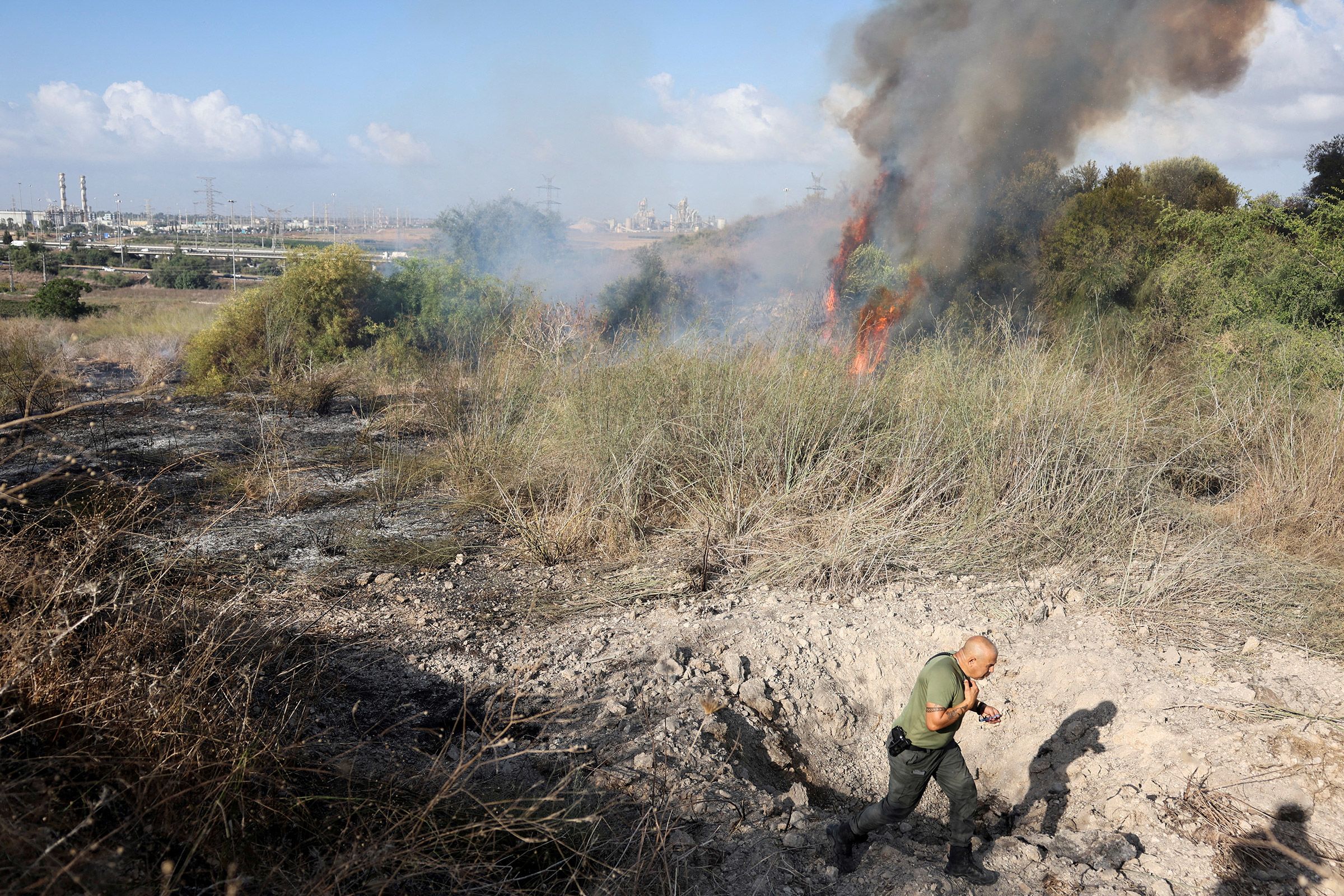
Israeli Prime Minister Benjamin Netanyahu issued a stern warning to Yemen’s Houthi rebels, declaring that they will face a “heavy price” after a missile launched by the Iran-backed group landed in central Israel. This incident marks a significant escalation in the ongoing tensions in the Middle East, highlighting the widening scope of conflict involving Israel, Yemen, and their regional allies.
The missile strike, which occurred during a particularly volatile period, is a major development that could have far-reaching geopolitical consequences. Israel has been dealing with a surge in cross-border attacks, but the involvement of the Houthis in Yemen introduces a new dynamic to the conflict. Netanyahu’s response signals that Israel is prepared to take retaliatory measures, and the situation could further destabilize an already fraught region.
The Missile Strike: A Serious Escalation
The missile launched by the Houthis reportedly struck an area in central Israel, causing alarm but fortunately no immediate casualties. This is the first time Yemen’s Houthi rebels have targeted Israel in such a direct manner, underscoring their expanding influence and capabilities in the region. The Houthis have long been engaged in a brutal civil war in Yemen, where they have received significant support from Iran, but their reach extending into Israel represents a notable shift in their strategy.
The missile strike followed a pattern of increasing provocations and attacks on Israeli territory, with the country already facing threats from multiple fronts, including Gaza and Lebanon. The Houthis’ involvement suggests a concerted effort by Iran-backed groups to open new fronts against Israel, which could lead to a broader regional conflict.
Netanyahu’s Strong Response
In a televised address following the attack, Netanyahu made it clear that Israel would not tolerate such aggression. “Those who harm us will pay a heavy price,” Netanyahu said, directing his message toward the Houthis and their backers. He emphasized that Israel’s defense forces are prepared to respond decisively to any further provocations, signaling the possibility of military action against Houthi targets in Yemen.
Netanyahu’s warning to the Houthis aligns with his broader stance on Iran and its regional proxies, which include Hezbollah in Lebanon and various militant groups in Gaza. He has consistently maintained that Iran is the primary driver of instability in the Middle East and has vowed to confront Tehran’s influence wherever it poses a threat to Israel. The Houthis, as an Iran-backed group, are now firmly within Israel’s crosshairs, especially after this missile attack.
The Role of the Houthis in the Middle East Conflict
Yemen’s Houthis, formally known as Ansar Allah, have been fighting a bloody civil war against the internationally recognized Yemeni government since 2015. Backed by Iran, the Houthis have gained control over large parts of northern Yemen, including the capital, Sanaa. They have also been engaged in sporadic attacks on Saudi Arabia and the United Arab Emirates, both of which have supported the Yemeni government in the conflict.
The Houthis’ ties to Iran are well-documented, with Tehran providing the group with weapons, training, and financial support. The group’s expansion into attacks against Israel may be part of a broader Iranian strategy to exert pressure on Israel through its network of proxy forces across the region. This attack underscores the growing threat posed by the Houthis as they extend their reach beyond Yemen’s borders and into the broader Middle East conflict.
Iran’s Involvement: A Regional Power Play
Iran’s role in supporting the Houthis and other militant groups in the region has long been a point of contention, not only for Israel but also for the Gulf states and the wider international community. Iran’s goal is to expand its influence and create a so-called “axis of resistance” stretching from Yemen to Lebanon, which includes groups like Hezbollah, Hamas, and now, potentially, the Houthis in Yemen.
This missile attack on Israel highlights the potential for Iran’s proxies to engage in coordinated action, raising concerns that the conflict could escalate into a broader war. Iran has been facing increasing pressure from both Israel and the United States over its nuclear program and regional ambitions, and the missile strike could be seen as a response to that pressure.
For Israel, the attack represents yet another front in its ongoing battle against Iranian influence. Netanyahu’s government has already been engaged in efforts to counter Iran’s presence in Syria and Lebanon, and now Yemen seems to be the latest battleground in this ongoing struggle. The potential for further Houthi attacks against Israel raises the stakes in what is becoming an increasingly complex and dangerous conflict.
Regional and International Reactions
The missile strike has elicited reactions from across the region and beyond. Saudi Arabia and the United Arab Emirates, both of which have been involved in the conflict against the Houthis in Yemen, expressed their solidarity with Israel and condemned the attack. The Gulf states are concerned about the growing influence of Iran and its proxies, and this attack only strengthens their resolve to counter Iranian ambitions in the region.
The United States, a key ally of Israel, also condemned the attack and reiterated its support for Israel’s right to defend itself. U.S. officials have been closely monitoring the situation in Yemen and the broader Middle East, with Washington playing a key role in efforts to broker peace in Yemen. However, this missile attack could complicate those efforts, especially if Israel decides to retaliate against the Houthis in Yemen.
The European Union and other international bodies have also called for restraint and warned against further escalation. The fear is that an Israeli response could lead to a wider regional conflict, drawing in other countries and groups aligned with Iran, such as Hezbollah in Lebanon or militias in Iraq and Syria.
The Possibility of Retaliation
Netanyahu’s warning of a “heavy price” suggests that Israel is considering military options in response to the missile strike. Israel has a history of retaliating swiftly and forcefully against attacks on its territory, and it is likely that the Israeli Defense Forces (IDF) are already planning a potential response. This could involve targeted airstrikes on Houthi military positions in Yemen, similar to Israel’s strikes against Iranian targets in Syria.
However, a military response carries significant risks. Striking targets in Yemen could provoke a broader conflict, potentially drawing in other regional players like Iran or Hezbollah. Additionally, the Houthis have demonstrated their ability to launch missile and drone attacks against regional adversaries, and further provocations could escalate the conflict into a wider war.
The Broader Implications
The missile strike by Yemen’s Houthis represents a dangerous escalation in the already volatile Middle East. The involvement of the Houthis in direct attacks against Israel highlights the expanding reach of Iran’s proxy forces and the growing complexity of the region’s conflicts. Netanyahu’s strong warning signals that Israel is prepared to take action, but any retaliation carries the risk of further destabilizing the region.
As the situation continues to develop, the international community will be closely watching how Israel responds and whether this incident will lead to a broader confrontation involving Iran and its regional allies. The missile strike serves as a reminder of the fragile balance of power in the Middle East and the potential for small provocations to ignite larger conflicts.