

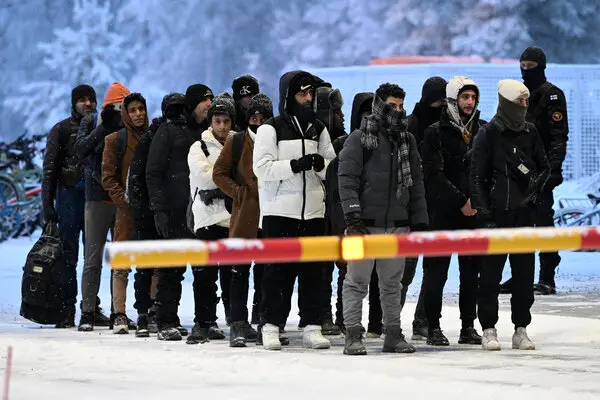
Finland Block Migrants Crossing from Russia
In response to growing concerns over border security and the potential influx of migrants, Finland has enacted a new law aimed at preventing migrants from crossing its border from Russia. The legislation, which passed with overwhelming support, represents a significant shift in Finland’s approach to managing its border with its eastern neighbor.
The new law comes amid increased geopolitical tensions and migration pressures in the region. Finland shares a 1,340-kilometer (833-mile) border with Russia, making it the European Union country with the longest direct land border with Russia. Historically, this border has seen relatively low levels of illegal crossings. However, the changing dynamics in global migration patterns and heightened security concerns have prompted Finnish lawmakers to take preemptive action.
Key Provisions of the Law
The legislation includes several measures designed to enhance border security and control migration flows:
- Border Fence Construction: The law authorizes the construction of a physical barrier along key sections of the border to deter illegal crossings. This fence will be equipped with advanced surveillance technology to monitor and respond to any breaches.
- Increased Patrols and Surveillance: The Finnish Border Guard will receive additional resources to increase patrols and surveillance along the border. This includes the deployment of drones and other modern monitoring equipment to detect and prevent unauthorized crossings.
- Detention and Processing Centers: The law allows for the establishment of new detention and processing centers near the border to manage any migrants who do manage to cross. These centers will facilitate the swift processing of asylum claims and ensure that individuals are housed in secure and humane conditions while their cases are reviewed.
- International Cooperation: The legislation emphasizes the importance of international cooperation, particularly with the European Union and neighboring countries. Finland aims to work closely with its EU partners to share information and coordinate efforts to manage migration flows effectively.
Government and Public Reactions
Finnish government officials have defended the new law as a necessary measure to protect national security and maintain public order. Interior Minister Krista Mikkonen stated, “This law is about ensuring that we have the tools we need to manage our borders effectively and to prevent any potential crises. We are committed to upholding our international obligations, but we must also protect our citizens and our country.”
Public opinion on the legislation is mixed. While some Finns support the law as a prudent step to safeguard the country, others have expressed concerns about its humanitarian implications. Human rights organizations have urged the Finnish government to ensure that the rights of asylum seekers and migrants are respected and that the country continues to meet its international obligations.
Regional and International Implications
Finland’s new law is likely to have broader implications for the region and for EU-Russia relations. The move may prompt other countries with borders near Russia to consider similar measures, potentially leading to a more fortified and securitized regional border landscape.
The law also adds another layer of complexity to Finland’s relationship with Russia. While Finnish officials have emphasized that the legislation is not aimed specifically at Russia, the move is likely to be viewed within the context of broader geopolitical tensions between the West and Russia.
As Finland takes decisive action to bolster its border security and manage migration flows, the new law reflects a growing trend among European nations to strengthen their borders in response to evolving security and migration challenges. While the effectiveness and humanitarian impact of the legislation will be closely watched, it underscores Finland’s commitment to safeguarding its borders and maintaining public order in an increasingly complex global landscape.