

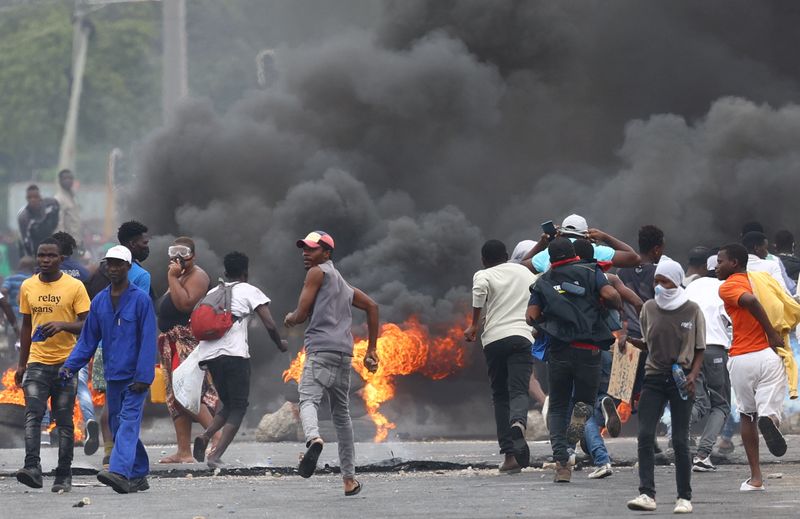
Massive Demonstrations in Maputo Amid Growing Discontent
In a dramatic escalation of tensions between the government and opposition forces, Mozambique witnessed its largest protest in recent memory on October 24, 2024. Thousands of demonstrators took to the streets of the capital, Maputo, to express their dissatisfaction with the government’s handling of key issues, including economic hardships, political repression, and corruption. The protest, led by the main opposition party, the Renamo (Resistência Nacional Moçambicana), marks the most significant show of defiance since the ruling Frelimo party came to power after the country’s civil war.
However, what began as a peaceful protest quickly descended into violent clashes as police forces, equipped with riot gear, moved in to disperse the crowd. The crackdown has further stoked anger among the population, leading to increased calls for reforms, accountability, and greater freedoms.
The Roots of the Protest: Economic Struggles and Political Discontent
Mozambique has long faced challenges in terms of economic development, poverty alleviation, and political stability. Despite the country’s wealth in natural resources—especially in areas such as natural gas, coal, and agriculture—many ordinary Mozambicans continue to suffer from extreme poverty. According to World Bank data, nearly 60% of the population lives below the poverty line, and the country ranks among the lowest in terms of income levels and social development indicators in the region.
For years, the ruling Frelimo Party, which has been in power since Mozambique gained independence from Portugal in 1975, has been accused of corruption and mismanagement, particularly in the natural resources sector. Despite the country’s vast wealth, critics argue that this has not translated into tangible benefits for the population, with much of the country’s prosperity concentrated among a few elites and foreign companies.
These grievances were exacerbated by the COVID-19 pandemic, which led to a severe economic downturn, job losses, and increased hardship for many people. Rising inflation, particularly in the cost of food and fuel, has pushed the country’s already struggling middle and lower classes to the brink, sparking widespread dissatisfaction with the government’s handling of the crisis.
Renamo and the Call for Change
The Renamo party, which has historically been a rival to Frelimo, has played a central role in leading the opposition protests. Originally founded as a rebel group during the country’s brutal civil war (1977–1992), Renamo transitioned into a political party after the signing of the Rome Peace Accords in 1992. Although the party officially renounced violence and entered the political mainstream, tensions with Frelimo have remained high, particularly over issues of power-sharing, corruption, and democratic freedoms.
In recent months, Renamo has become more vocal in its criticism of the government, accusing it of authoritarianism and suppressing opposition voices. The protest in Maputo was organized in response to several key issues, including the growing economic crisis, allegations of corruption at the highest levels of government, the failure to address climate change impacts, and widespread political repression, including the restriction of freedom of speech and assembly.
The Renamo leadership has also called for electoral reform, citing concerns about vote-rigging and intimidation during recent local and national elections. Although the country officially transitioned to democracy in the early 1990s, opposition parties have repeatedly raised concerns about the fairness of elections and the manipulation of the political process.
The Police Crackdown: Violence Erupts on the Streets
The peaceful demonstration, which began in the central squares of Maputo, quickly turned violent as the Mozambique police, equipped with batons, tear gas, and rubber bullets, intervened to disperse the protesters. Eyewitness accounts suggest that police used excessive force, particularly against peaceful demonstrators who were calling for change and accountability.
Local media reports have indicated that multiple injuries were sustained during the clashes, although the exact number of casualties remains unclear. Many protesters were seen fleeing the streets, some bleeding and others overwhelmed by the effects of tear gas. The police response has drawn sharp criticism from human rights organizations, which have accused the government of repressing peaceful dissent.
Amnesty International and Human Rights Watch have condemned the violence, calling for an independent investigation into the actions of the police and the use of excessive force. These organizations have also called on the government to respect the right of Mozambican citizens to peacefully assemble and express their political views.
In a statement, Amnesty International said, “The Mozambican government must immediately cease its crackdown on opposition protests. The excessive use of force against peaceful protesters is a blatant violation of international human rights standards.”
International Reactions and Calls for Dialogue
The crackdown on peaceful protesters has attracted widespread condemnation both within Mozambique and internationally. European Union officials have called for restraint from security forces and have urged the Mozambican government to engage in dialogue with the opposition. The United States has also voiced concern over the escalating violence, with the U.S. State Department urging both the government and opposition to resolve their differences through peaceful means.
South Africa, which shares strong economic and political ties with Mozambique, has expressed concern over the events and called for calm on both sides. South African leaders have encouraged the Mozambican government to allow peaceful protests and free expression, stressing the importance of democratic principles in the region.
Some analysts suggest that the violent crackdown could further polarize the political climate in Mozambique and lead to more unrest. If the government continues to stifle opposition movements, it risks further alienating the country’s disenfranchised citizens, many of whom see no improvement in their lives under the current regime.
The Road Ahead: Will Reform Come?
The events in Maputo serve as a stark reminder of the growing political discontent within Mozambique. While the government has repeatedly assured the international community of its commitment to democratic reforms, the repression of opposition voices and the handling of protests suggest that much work remains to be done.
The violence during the protest highlights the deepening divisions between the ruling party and opposition forces. For many Mozambicans, the current political system appears unresponsive to the needs of the people. As long as these grievances remain unaddressed, the potential for further unrest and protests will likely continue to grow.
The key to resolving Mozambique’s political and economic challenges lies in dialogue. However, for meaningful change to occur, the government must demonstrate a willingness to listen to the opposition and civil society, and more importantly, to make the necessary reforms to restore faith in the country’s democratic processes.
Until then, Mozambique’s political future remains uncertain, with many watching to see whether the government will adopt a more conciliatory approach or continue down a path of repression and division.
Conclusion: A Nation at a Crossroads
The largest protest in Mozambique in years, coupled with the violent crackdown by security forces, underscores the country’s ongoing political turmoil and disillusionment with the ruling elite. As opposition groups call for change and greater accountability, the government’s response will be crucial in determining the future stability of the nation. Mozambique, like many nations in Africa, faces the delicate task of balancing development with democratic freedoms and human rights. Whether the government can reconcile with the opposition and address the underlying issues will determine the country’s path forward.