

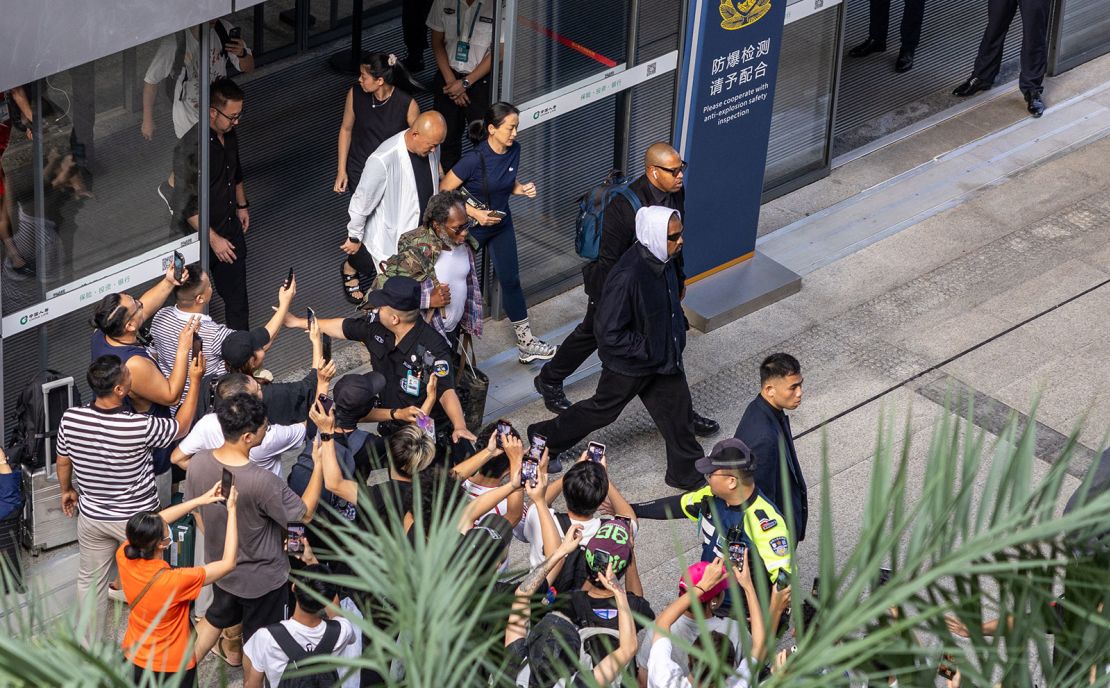
China is renowned for its stringent censorship laws, often stifling freedom of expression and tightly controlling what can be consumed by its citizens. The Chinese government maintains a rigorous grip on media, art, and public discourse, aiming to preserve social stability and uphold its ideological framework. However, the recent decision to allow rapper Kanye West to perform in the country has sparked intrigue and debate, raising questions about the nature of censorship and the factors that dictate which voices are allowed to resonate within its borders.
The Context of Censorship in China
China’s censorship is characterized by a complex web of regulations that govern not only traditional media outlets but also digital platforms, literature, and the arts. The Great Firewall effectively blocks access to foreign websites and services that might pose a challenge to the government’s narrative, while the Chinese Communist Party (CCP) exerts control over local media, shaping the information landscape.
Musicians and artists looking to perform in China often face the reality of stringent guidelines, with many being barred from entry altogether due to past comments or actions deemed politically sensitive or disrespectful to Chinese culture. This has led to a perception that China selectively curates the cultural content that aligns with its political agenda.
Kanye West’s Controversial History
Kanye West, known for his provocative statements and unconventional behavior, has had a tumultuous relationship with the media and public opinion. In recent years, he has made headlines for various controversies, including his outspoken support for former President Donald Trump, comments about race and mental health, and, most recently, his antisemitic remarks that resulted in widespread backlash.
Given West’s controversial reputation, many observers were surprised when it was announced that he would be allowed to perform in China. The performance seemed to run counter to the country’s established norms of censorship, leading to speculation about the motivations behind this decision.
Why Did China Allow the Performance?
Several factors could explain China’s decision to permit Kanye West’s performance:
- Cultural Influence and Commercial Interests: Despite his controversies, West is an influential figure in the global music industry, with a vast fan base. Allowing his performance may have been seen as a way to capitalize on his popularity and enhance China’s cultural cachet. The Chinese government often prioritizes economic gain and cultural exchange, viewing high-profile events as opportunities to showcase a more open and modern image to the world.
- A Controlled Environment: By allowing the performance, China may have perceived it as an opportunity to exert control over the narrative. Hosting West in a carefully managed environment could allow authorities to monitor the event closely, mitigating any potential fallout while demonstrating a willingness to engage with international artists. This controlled approach could also serve to underline the government’s ability to manage public discourse, regardless of the artist’s controversial past.
- A Shift in Censorship Dynamics: The decision may also reflect a broader evolution in China’s approach to censorship. As the country seeks to strengthen its global presence and appeal to younger audiences, there may be an increasing recognition that embracing certain international figures—albeit within a constrained framework—could be beneficial for its image. This suggests a potential shift towards a more nuanced understanding of censorship that allows for some level of engagement with global culture while still maintaining core ideological tenets.
Reactions to the Performance
Kanye West’s performance was met with mixed reactions, both domestically and internationally. While fans celebrated the opportunity to see a global icon perform, critics expressed concerns about the implications of normalizing his controversial presence in China. Additionally, some observers pointed out that the performance may have inadvertently lent credibility to West, despite his problematic statements.
Conclusion
China’s decision to allow Kanye West to perform in the country highlights the complex interplay between censorship, cultural influence, and economic interests. While the Chinese government maintains a firm grip on the narrative within its borders, instances like this reveal the nuanced strategies employed to navigate the delicate balance between control and engagement.
As China continues to grapple with its global identity and aspirations, the intersection of censorship and cultural exchange will remain a topic of significant interest. Kanye West’s performance serves as a reminder of the complexities inherent in China’s approach to censorship and the often unpredictable nature of artistic expression within a tightly controlled environment.