

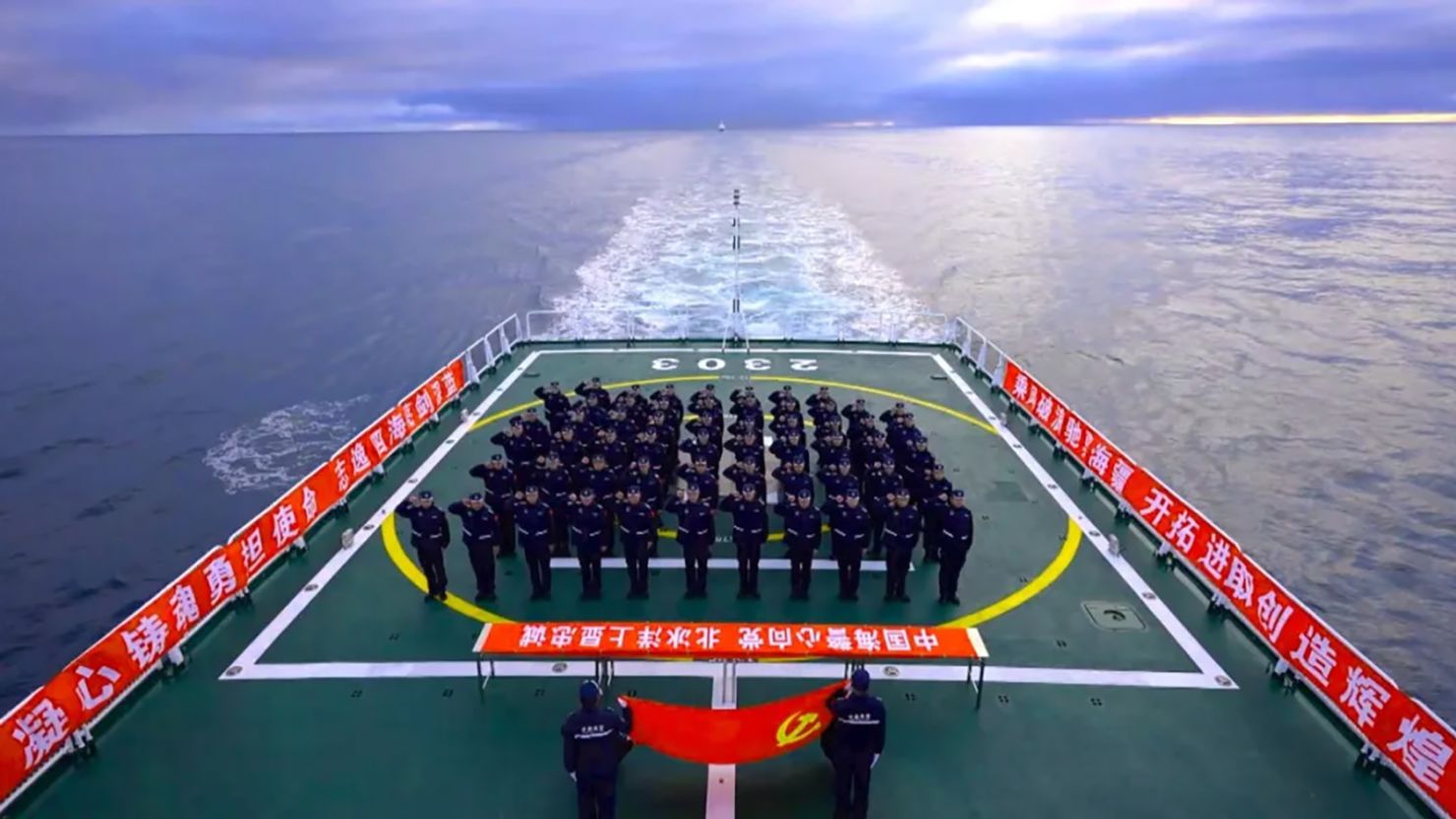
In a significant development, China’s Coast Guard has announced that it has entered the Arctic Ocean for the first time, a move that underscores the country’s expanding maritime ambitions in the region. This entry into Arctic waters coincides with China’s efforts to strengthen security ties with Russia, highlighting a growing partnership that has geopolitical implications in the Arctic and beyond.
A New Chapter in Arctic Exploration
The announcement of the China Coast Guard’s entry into the Arctic Ocean was made during a recent press conference, where officials described the mission as a pivotal step in the country’s maritime exploration and security strategy. According to reports, the Coast Guard vessel conducted research and patrol activities in the Arctic, marking a new chapter in China’s increasing presence in the region.
China’s interest in the Arctic has been driven by various factors, including the search for new shipping routes, access to untapped natural resources, and a desire to enhance its global influence. The melting of Arctic ice due to climate change has opened new maritime pathways, such as the Northern Sea Route, which could significantly shorten shipping times between Asia and Europe.
Strengthening Ties with Russia
China’s Arctic ambitions are closely aligned with its security partnership with Russia, particularly in the context of the two countries’ increasing collaboration in military and economic spheres. The recent entry into the Arctic Ocean follows a series of joint exercises and agreements aimed at enhancing cooperation in maritime security, energy exploration, and infrastructure development.
During a high-level meeting earlier this year, Chinese President Xi Jinping and Russian President Vladimir Putin emphasized their commitment to deepening bilateral ties in the Arctic. This collaboration includes joint research initiatives and exploration activities, with both nations seeking to capitalize on the region’s resources and strategic waterways.
The strengthening of security ties between China and Russia in the Arctic is viewed with concern by Western nations, which fear that increased cooperation could challenge their influence and security interests in the region. The United States and its allies have expressed apprehension over China’s expanding presence in the Arctic, particularly in light of the strategic military developments taking place in the region.
Implications for Arctic Governance
China’s entry into the Arctic Ocean raises important questions about governance and territorial claims in a region that is already witnessing increasing competition among global powers. As Arctic ice continues to melt, nations are vying for control over shipping routes, fishing grounds, and resource-rich areas, making effective governance and cooperation essential to maintaining stability.
China has positioned itself as a “near-Arctic state” and has been actively participating in international discussions regarding Arctic governance. The country has sought to be included in various Arctic forums, including the Arctic Council, despite not being a member. Its growing involvement in Arctic affairs reflects its broader ambitions on the global stage and highlights the need for a cooperative framework that addresses the interests of all stakeholders.
Environmental Concerns and Future Challenges
While China’s foray into the Arctic may present economic opportunities, it also raises significant environmental concerns. Increased shipping traffic, resource extraction, and potential military activities could exacerbate the fragile ecosystem of the Arctic, which is already under threat from climate change. Environmentalists have warned that unchecked development in the region could lead to irreversible damage and loss of biodiversity.
As China’s Coast Guard continues its operations in the Arctic, it will be crucial for all nations involved to prioritize environmental protection and sustainability. Collaborative efforts will be necessary to mitigate the potential negative impacts of increased human activity in the region.
Conclusion
China’s Coast Guard claims to have entered the Arctic Ocean for the first time, marking a notable development in the country’s maritime strategy and its growing influence in the region. This move, coupled with strengthened security ties with Russia, signals China’s commitment to expanding its presence in the Arctic amid rising geopolitical tensions.
As the Arctic becomes an arena for competition among global powers, effective governance, environmental stewardship, and cooperation will be essential to ensure the region remains a space for peaceful collaboration rather than conflict. The coming years will be critical in shaping the future of the Arctic, and how nations navigate their interests in this rapidly changing landscape will have lasting implications for global security and environmental health.