

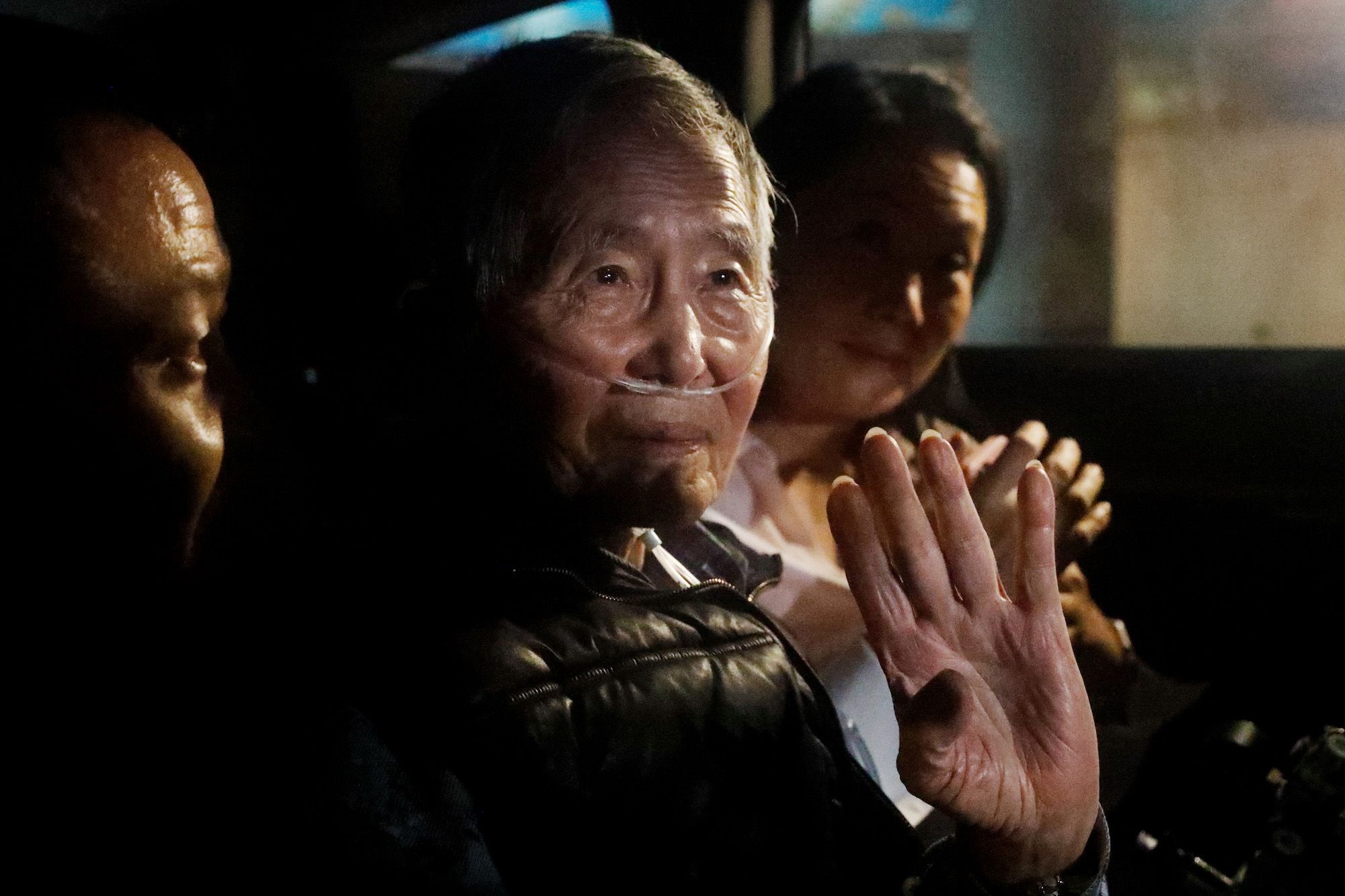
Peru’s Ex-Leader Alberto Fujimori Dies at 86: A Polarizing Legacy
Alberto Fujimori, the former president of Peru whose decade-long reign from 1990 to 2000 left an indelible mark on the nation’s political landscape, has died at the age of 86. Fujimori, who had been serving a lengthy prison sentence for human rights abuses and corruption, passed away due to complications from long-standing health issues. His death closes the chapter on one of the most controversial and divisive figures in Peruvian history.
Fujimori’s Rise to Power
Born in Lima to Japanese immigrants, Fujimori’s political ascent was unexpected. A university professor with no prior experience in politics, he surprised the nation in 1990 by defeating writer and Nobel Prize laureate Mario Vargas Llosa in a presidential election. His campaign, focused on economic reform and anti-corruption promises, resonated with a population weary of hyperinflation and the violence of the Maoist insurgency group, the Shining Path.
Once in office, Fujimori swiftly moved to stabilize Peru’s crumbling economy. His government implemented free-market reforms, slashed inflation, and attracted foreign investment. These policies, while praised by many in the international community, led to high levels of unemployment and poverty, affecting the most vulnerable segments of society.
The Fight Against Terrorism
Perhaps the most defining aspect of Fujimori’s presidency was his hardline stance against the Shining Path and the Tupac Amaru Revolutionary Movement, two violent insurgent groups that had plagued Peru for years. Under his leadership, government forces captured Shining Path leader Abimael Guzmán in 1992, a decisive blow that significantly reduced the group’s threat.
Fujimori’s tactics in combating terrorism were effective but brutal. His government employed military force, secret police, and widespread surveillance to dismantle the insurgency. However, these efforts came at a high cost. The government was accused of human rights violations, including extrajudicial killings, forced disappearances, and torture. These abuses, once revealed, stained his legacy, despite his success in restoring peace to the nation.
The 1992 “Autogolpe” and Authoritarian Turn
Fujimori’s presidency took an authoritarian turn in 1992 when he dissolved the Peruvian Congress and judiciary in what became known as the “autogolpe” or “self-coup.” Backed by the military, he justified the move as necessary to push through reforms and defeat insurgents. The international community condemned the action, but domestically, many Peruvians supported it, seeing Fujimori as a leader who could deliver stability.
In the following years, Fujimori consolidated his power, rewriting the constitution to allow himself to run for a second term in 1995. Despite concerns about democratic backsliding, he won the election with a wide margin, further entrenching his rule.
Corruption Scandals and Downfall
By the late 1990s, cracks began to appear in Fujimori’s administration. The once-popular president faced increasing criticism for his authoritarian tactics, alleged corruption, and human rights abuses. His downfall was precipitated by a massive corruption scandal involving his right-hand man, Vladimiro Montesinos, the head of Peru’s intelligence service.
In 2000, videos surfaced showing Montesinos bribing politicians and media figures. The scandal ignited widespread protests and led to Fujimori fleeing to Japan, where he sought asylum and resigned via fax while on an official trip to Brunei.
In 2005, Fujimori was arrested in Chile during an attempt to return to Peru and reenter politics. He was later extradited to Peru, where he faced multiple charges related to corruption and human rights violations.
Conviction and Imprisonment
In 2007, Alberto Fujimori was convicted on charges of human rights abuses, including the killings of civilians during anti-insurgency operations. He was sentenced to 25 years in prison, marking the fall of one of Peru’s most powerful leaders. Despite his imprisonment, Fujimori remained a deeply polarizing figure. Some Peruvians hailed him as a hero who saved the country from terrorism and economic collapse, while others viewed him as a dictator responsible for severe human rights violations.
Throughout his imprisonment, Fujimori’s health deteriorated, with repeated hospitalizations for heart issues, cancer treatments, and other ailments. In 2017, then-President Pedro Pablo Kuczynski granted him a humanitarian pardon, citing his poor health, but this decision was later overturned by Peru’s Supreme Court.
Fujimori’s Complex Legacy
Fujimori’s death leaves behind a legacy that is as complex as his presidency. For many, he will be remembered as the leader who saved Peru from economic collapse and defeated the Shining Path, restoring peace and stability to a country on the brink of chaos. His hardline economic policies, known as “Fujishock,” are credited with turning around Peru’s economy, while his decisive action against insurgents ended years of violence that had claimed tens of thousands of lives.
However, his human rights abuses, authoritarian tendencies, and corruption scandals cast a long shadow over his achievements. The extrajudicial killings and disappearances during his presidency remain a dark chapter in Peru’s history. His “self-coup” in 1992 set a dangerous precedent for democracy in Latin America, and his reliance on secret police and widespread surveillance contributed to a climate of fear and repression.
The Fujimori Political Dynasty
Even as Fujimori’s own political career ended in disgrace, his family remained a force in Peruvian politics. His daughter, Keiko Fujimori, has run for president multiple times, narrowly losing in 2011 and 2016. Though Keiko’s political fortunes have been mixed, the Fujimori name continues to hold significant weight in Peruvian politics, with a strong base of support among those who remember Alberto’s leadership fondly.
Conclusion
Alberto Fujimori’s death at 86 closes the book on one of Peru’s most influential and controversial leaders. His presidency was marked by both triumph and tragedy, with his economic reforms and counterinsurgency efforts winning him support, while his authoritarian actions and human rights violations divided the nation. As Peru reflects on his legacy, the debate over whether Fujimori was a hero or a villain will undoubtedly continue for years to come.