

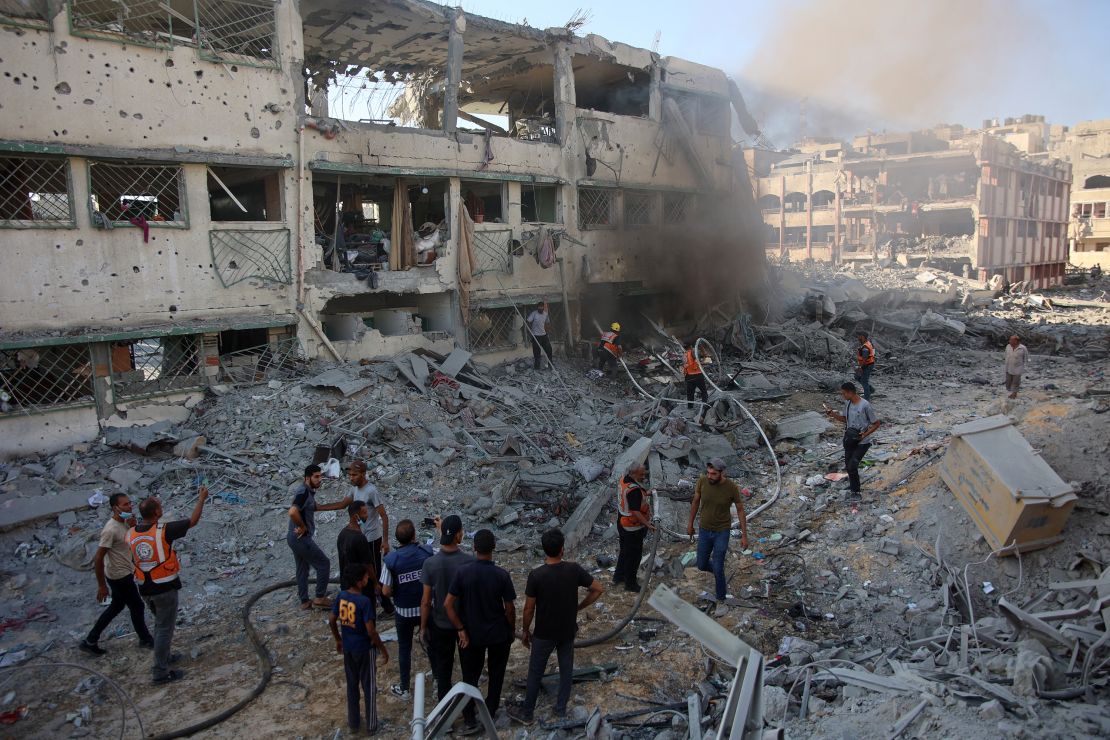
In a tragic and escalating chapter of the Israeli-Palestinian conflict, Israeli airstrikes on two shelters in Gaza have reportedly killed 17 civilians, including women and children. The strikes, which occurred in the early hours of the morning, targeted densely populated areas where families had sought refuge from ongoing hostilities. This latest incident has drawn widespread condemnation from international human rights organizations and has further inflamed tensions in a region already teetering on the brink of broader conflict.
The Airstrikes: Details and Aftermath
According to reports from Gaza’s Health Ministry and local media, the airstrikes hit two residential buildings that were being used as shelters by civilians. These shelters, which had been established in response to previous bombings, were intended to provide a safe haven for those displaced by the ongoing conflict. Instead, they became the sites of devastating loss, with 17 people killed and many others injured in the blasts.
Eyewitnesses described scenes of chaos and despair as rescue workers and local residents rushed to dig through the rubble in search of survivors. The airstrikes reportedly left large sections of the buildings in ruins, with debris scattered across the streets and emergency responders struggling to reach those trapped beneath the wreckage.
The victims included entire families, many of whom had fled their homes in other parts of Gaza to escape the relentless bombardment. The exact number of injured remains unclear, but hospitals in Gaza, already overwhelmed by the influx of casualties from recent fighting, are struggling to cope with the latest wave of wounded.
Israel’s Justification and Response
The Israeli military has defended the airstrikes, claiming that the targeted buildings were being used by Hamas militants to launch attacks on Israeli cities. In a statement, the Israel Defense Forces (IDF) said that it had received intelligence indicating that the shelters were being used to store weapons and plan operations, making them legitimate military targets.
The IDF also expressed regret for any civilian casualties, stating that it takes measures to avoid harming non-combatants, such as issuing warnings before strikes when possible. However, the Israeli government maintains that Hamas bears ultimate responsibility for the civilian deaths, accusing the group of using human shields by operating within densely populated areas.
Hamas and Palestinian Reactions
Hamas, the Islamist militant group that governs Gaza, has condemned the airstrikes as a “war crime” and vowed to retaliate. In a statement, Hamas accused Israel of deliberately targeting civilians and described the attack as part of a broader campaign of ethnic cleansing. The group has called on Palestinians to continue resisting what it views as Israeli aggression and has urged the international community to intervene.
In the wake of the strikes, protests have erupted in Gaza and the West Bank, with demonstrators denouncing both the Israeli military and the perceived inaction of the international community. The Palestinian Authority has also condemned the airstrikes, with President Mahmoud Abbas calling for urgent international action to protect Palestinian civilians and hold Israel accountable for what he described as “inhumane acts.”
International Outcry and Diplomatic Tensions
The airstrikes have sparked a wave of international condemnation, with human rights organizations and world leaders calling for an immediate end to the violence. The United Nations has expressed deep concern over the rising civilian toll in Gaza and has called for both sides to adhere to international humanitarian law, which prohibits attacks on civilians and civilian infrastructure.
UN Secretary-General António Guterres has reiterated his call for a ceasefire and for both parties to return to negotiations aimed at resolving the conflict. “This latest tragedy underscores the urgent need for all parties to de-escalate and protect innocent lives,” Guterres said in a statement. “The cycle of violence must end, and the international community must take concrete steps to bring about a just and lasting peace.”
The United States, a key ally of Israel, has also expressed concern over the civilian casualties but has stopped short of condemning Israel’s actions. The U.S. State Department has reiterated its support for Israel’s right to defend itself while urging all parties to avoid actions that could further escalate the conflict. However, growing calls from within the U.S. and abroad for a more balanced approach to the Israeli-Palestinian conflict have put pressure on Washington to reconsider its stance.
European leaders have been more vocal in their criticism, with several countries calling for an independent investigation into the airstrikes and the broader conduct of the Israeli military. The European Union has emphasized the need for proportionality in military operations and has urged Israel to ensure the protection of civilians in accordance with international law.
The Broader Context: A Region in Turmoil
This latest incident is part of a broader escalation in the Israeli-Palestinian conflict, which has seen a dramatic increase in violence in recent weeks. The conflict, which has flared periodically for decades, has deepened in intensity, with both sides suffering significant casualties.
For Gaza’s residents, who have endured years of blockades, economic hardship, and repeated military operations, the latest airstrikes are yet another devastating blow. The humanitarian situation in the territory, already dire, has deteriorated further as the conflict drags on. Hospitals are overwhelmed, infrastructure is in ruins, and many civilians are left with nowhere to turn for safety.
The conflict’s toll on civilians has drawn renewed attention to the longstanding issues at the heart of the Israeli-Palestinian dispute, including the status of Jerusalem, the right of return for Palestinian refugees, and the future of Israeli settlements in the occupied territories. While these issues have been the subject of numerous failed peace efforts, the current violence underscores the urgency of finding a sustainable solution.
Conclusion: A Call for Peace Amidst Rising Tensions
The deadly airstrikes on Gaza shelters mark a tragic chapter in the ongoing conflict, highlighting the human cost of a seemingly intractable struggle. As the international community grapples with how to respond, the need for a ceasefire and a renewed commitment to peace has never been more urgent.
For the people of Gaza, who continue to bear the brunt of the violence, the hope is that this latest tragedy will galvanize the world to take meaningful action to end the conflict. Whether through diplomatic efforts, humanitarian aid, or pressure on the parties involved, the goal must be to protect civilians and pave the way for a just and lasting peace in the region.